Radon—you may remember seeing this word on the periodic table during your high school chemistry classes, but you probably don’t know that it is a harmful gas that can be found in your home!
You’ll see that quality insulation is key to keeping it away from your family.
Because “knowledge is power,” let Foratech give you the full picture!
What Is Radon?
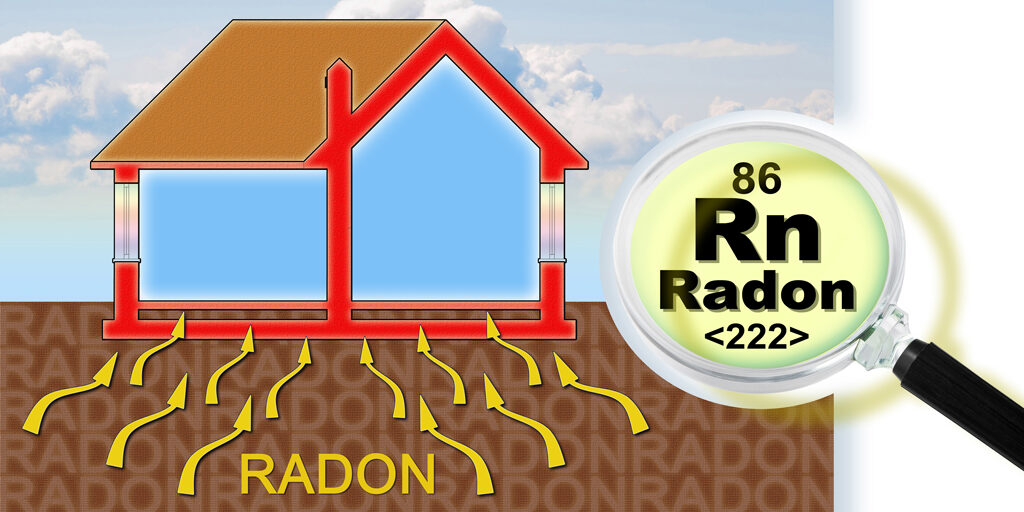
Radon is an odourless, colourless, and tasteless gas. It is therefore impossible to detect using our senses. This radioactive gas comes from the natural decay of uranium, an element found in the Earth’s crust and therefore in soil, rock, and even water.
As a result of this phenomenon, the radon that is released enters the surrounding air.
Outdoors, the presence of radon does not pose any risk because its concentration in the atmosphere is extremely low. However, in an enclosed environment, such as a house, the presence of radon becomes a problem.
Where Is Radon Found?
Dirt floors, openings around pipes and cables, as well as cracks in floors and foundations, are entry points for this silent enemy.
Naturally, you will find this gas directly at its source—that is, in the ground—and therefore in your basement or crawl space.
It will remain there in high concentrations because radon is a gas that is heavier than air, especially since the basement is the least ventilated area of the house.
Radon = Lung Cancer
According to the Canadian Cancer Society, “radon is the leading cause of lung cancer in non-smokers.”
After smoking, this harmful gas is the second leading cause of lung cancer in Quebec. Approximately 16% of deaths related to lung cancer are associated with the presence of radon.
Combine smoking with radon exposure and you get one of the deadliest combinations:
- According to data from Health Canada, smokers exposed to radon are at a much higher risk of developing lung cancer: a 33% chance compared with 5% for a non-smoker.
- In addition, according to the INSPQ, approximately 90% of deaths from radon-induced lung cancer occur among smokers.
Faced with so many alarming statistics, it goes without saying that the presence of radon in your home is a problem that absolutely must be addressed.
200 Bq/m³: The Golden Number
To detect the presence of radon in your home, you can perform a screening test yourself by purchasing a dosimeter, or you can call on a specialist.
Radon levels are measured in becquerels per cubic metre (Bq/m³).
According to Health Canada, the limit for radon exposure is set at 200 Bq/m³, and action must be taken in the following cases:
- A level between 200 Bq/m³ and 600 Bq/m³ will require corrective measures to be taken within 2 years.
- A level above 600 Bq/m³ will require corrective measures to be taken within one year.
It is the homeowner’s responsibility to take the necessary steps to reduce radon levels. Good judgment is therefore essential!
Keep in mind that even a very low radon level, such as 50 Bq/m³, can still pose a long-term risk to your family’s health.
Prevention Is Better Than Cure!
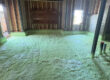
Obviously, the ideal solution is to prevent radon infiltration before construction of your home even begins. To eliminate it permanently, all you need to do is insulate your floor with urethane beneath the basement’s concrete slab.
This is when you should call on the Foratech team!
Insulating your home is already an essential step.
Therefore, additional measures to prevent radon infiltration cost only a few hundred dollars.
That’s nothing compared with the cost of new construction and the negative effects of radon on your health!
Don’t cut corners when it comes to your family’s health—call on the insulation pros!